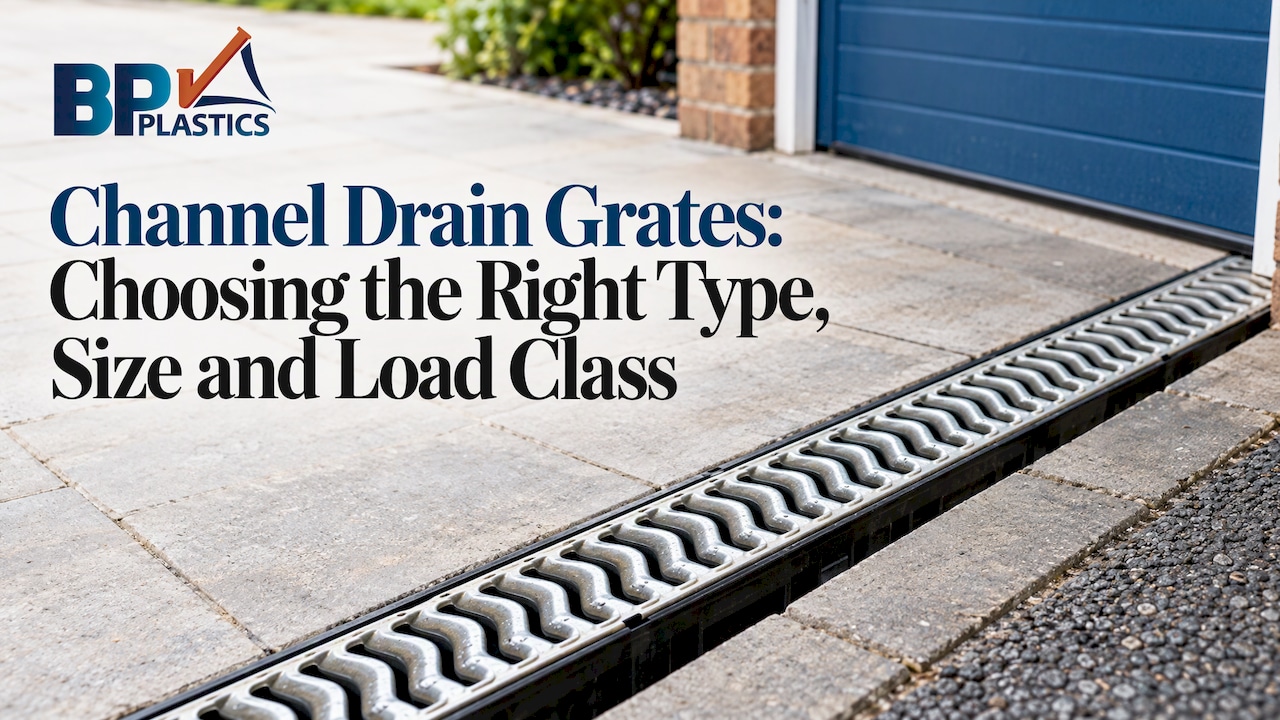
The right channel drain grate is the one whose load class matches the heaviest traffic that can reach it, whose material suits the setting, and whose slot or bar pattern fits the channel body beneath it. Get those three right and the rest is routine groundwork. Get the load class wrong and the grate cracks or lifts, usually on a driveway. We supply channel drainage, grating and fittings for trade and DIY projects, and this guide covers what to check before you order.
TL;DR
- Choose the load class first, from the heaviest vehicle that can ever cross the channel: A15 for patios and footpaths, B125 for domestic driveways and car parks, C250 for kerbside channels, D400 and above for roads.
- Match material to the setting: plastic for gardens and walkways, galvanised steel for medium-traffic areas, stainless steel where hygiene matters, cast iron for the heaviest duty.
- A standard 100 mm deep channel handles most pavements of 200 m² or less, but size it from the area and rainfall rather than guessing.
- Lay the channel on a concrete bed and set the grating 3 to 5 mm below the paving so water still finds it if the surface settles.
- Check and clear grates regularly. A blocked channel is a flooding risk, not just a nuisance.
Table of Contents
- What a channel drain grate does
- Channel drain grate materials compared
- Grate designs: slotted, heel-proof, anti-theft and heavy-duty
- Load class: the decision that matters most
- Channel drain sizes
- Channel drain connections
- Fitting the channel and grate
- What affects the cost
- Where to buy channel drainage in bulk
- Looking after your grates
- FAQ
- Sources
What a channel drain grate does
A channel drain, also called a linear drain, is a long, narrow trough set into paving. Surface water runs across the paving, drops through the grating and flows along the channel to an outlet. From there it goes to a soakaway, a watercourse or a surface water drain, whichever your design and local rules allow.
The grate is the part everyone sees, and it does two jobs. It lets water in through gaps or slots, and it carries the load of feet, wheels or vehicles without moving or breaking. That second job is why the grate and the channel body are specified together, and why a cheap, thin grate in a heavily used area fails first.
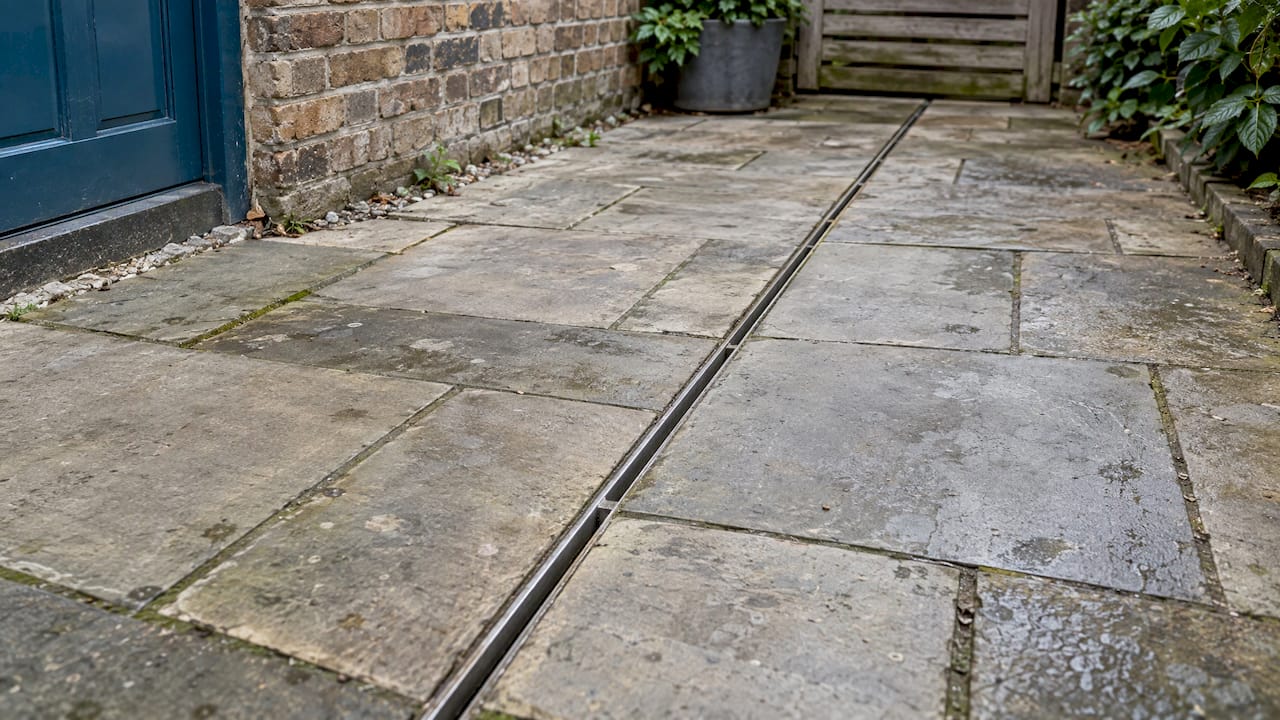
A slot channel is a variation. The channel has a narrow slot along the top and no separate grating, which gives a very minimal look on modern patios and courtyards. The design logic is the same: size the channel for the water, rate it for the traffic.
Channel drain grate materials compared
UK grates are made in five common materials, and each has a natural home, as one UK drainage contractor’s overview sets out. Here is how that translates into a buying decision.
| Material | Typical use | What to know |
|---|---|---|
| Plastic | Gardens, patios, residential walkways | Light, easy to cut and handle. Suits A15 duty. |
| Galvanised steel | Driveways, car parks, medium-traffic areas | A common step up where vehicles cross. Strong for the money. |
| Stainless steel | Places where hygiene or appearance matters | Used in food areas and visible architectural schemes. |
| Cast iron | Heavy-duty areas such as highways and industrial zones | The choice for the highest loads. |
| Composite | Where corrosion resistance is wanted | Strong and corrosion-resistant, with a lower carbon footprint. |
Material alone does not tell you the load class. A galvanised grate can be rated for a driveway or only for a path, depending on its design and the channel it sits in. Always read the class marked on the product.
Grate designs: slotted, heel-proof, anti-theft and heavy-duty
Beyond material, the pattern of the grate matters for who uses the space:
- Slotted grates suit pedestrian areas and give a neat finish.
- Heel-proof grates have gaps narrow enough to stop heels and wheelchair or pushchair wheels catching. Use them anywhere people walk, especially in public or commercial settings.
- Anti-theft grates have locking mechanisms, useful where metal grates are at risk of being lifted.
- Heavy-duty grates are built for industrial and transport areas.
Standard gratings with parallel bars and wide gaps move the most water. Narrower slots look neater and are safer underfoot, but can clog sooner with leaves and grit, so think about nearby trees before choosing.
Load class: the decision that matters most
Channel drainage is classified under BS EN 1433, the European standard for drainage channels in vehicular and pedestrian areas. The classes run from A to F. The ones you will meet on domestic and light commercial jobs are:
| Class | Typical location | Rough guide |
|---|---|---|
| A15 | Patios, footpaths, garden paths | Pedestrians and cyclists |
| B125 | Domestic driveways, car parks | Cars and light vehicles |
| C250 | Kerbside channels | Light commercial traffic |
| D400 and above | Roads, loading areas | Heavy traffic |
The number is a test load in kilonewtons, not a weight limit in tonnes. In practice, the rule is simple: pick the class for the heaviest thing that can possibly cross the channel. A delivery lorry reversing onto a drive, a skip, or a van parking over the line all count. Buying an A15 grate for a driveway is one of the commonest and most expensive mistakes, because the failure shows up only after the paving is finished.
The class also depends on how the channel is installed. A channel only achieves its rating when bedded and surrounded as its manufacturer specifies, usually in concrete. A strong grate over a weak bed does not make a strong drain.
Channel drain sizes
Size two things: the channel’s width and depth, and its capacity for the area it drains.
Width, depth and length
For patios and driveways, a 100 mm internal width is the common domestic choice. Wider channels, 150 mm and above, appear where the catchment is larger or the fall is shallow, and yards on commercial sites often go bigger still. UK linear drains range from 50 mm deep roof units to 250 mm deep motorway units, in materials including polymer concrete, wet-press concrete, HDPE and stainless steel. Gratings usually come in 500 mm or 1000 mm lengths, so plan your run in whole metres where you can and cut as little as possible.
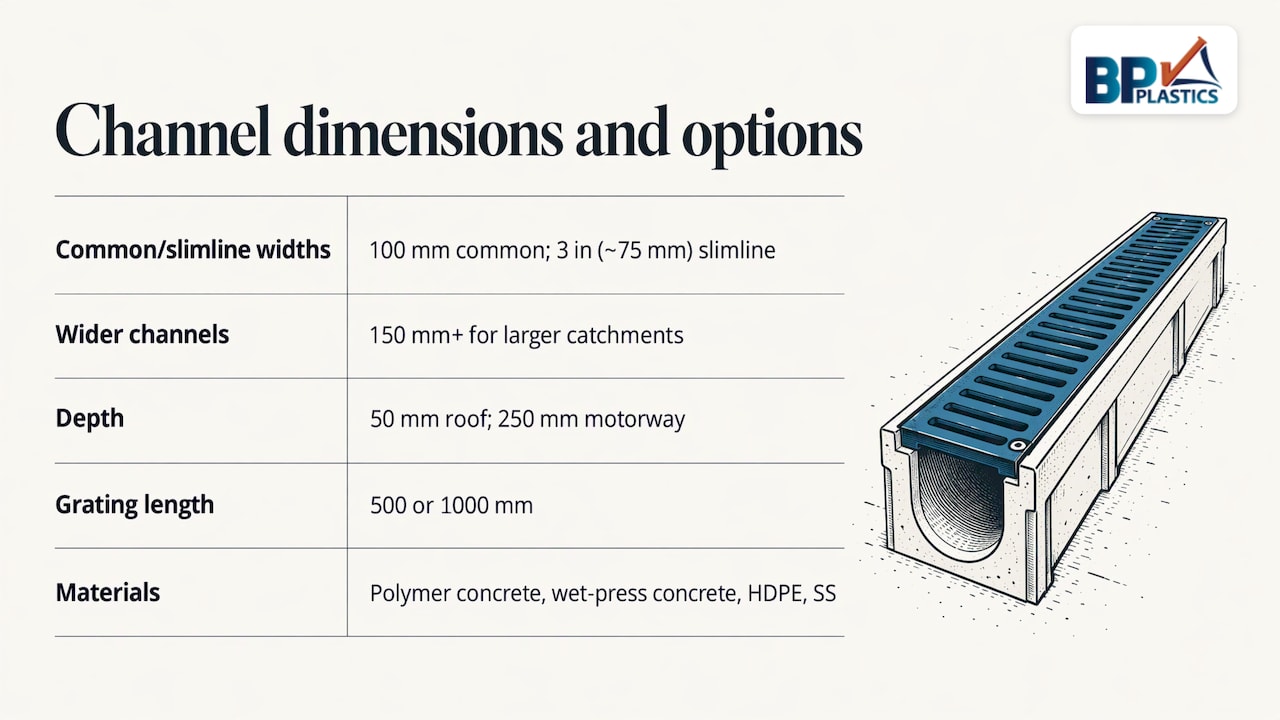
A 3 inch (about 75 mm) slimline channel suits narrow architectural lines, though its capacity is lower, so check it against the area it serves.
Capacity: a worked example
Pavingexpert gives the standard sizing sum using a typical UK rainfall intensity of 75 mm per hour. For a 120 m² pavement:
Q = (120 × 75) ÷ 3600 = 2.5 litres per second
The same source notes that a standard 100 mm deep channel has run-off capacity of around 4 to 5 litres per second even at shallow gradients, which is why it suits most pavements of 200 m² or less. So the 120 m² example is comfortably within a standard domestic channel.
For larger areas, multiple catchments, or anywhere flooding would cause real damage, have the capacity calculated by an engineer. Larger commercial systems can handle hundreds of litres per second, and these are designed, not picked from a catalogue.
Gradient
Channels do not need to be laid dead level, but they do need a consistent fall toward the outlet. Many installers work to a fall of roughly 1 in 100 to 1 in 200, which is 5 to 10 mm per metre. Too steep and water rushes past the grate. Too flat and silt settles. Always follow the manufacturer’s instructions for the system you buy, because some are built with an internal fall.
Channel drain connections
The channel is only half the system. Water has to leave it somewhere, and the connection is where many installations go wrong.
- End outlets and bottom outlets connect the channel to underground pipe. Check which your channel accepts and whether the outlet is a spigot or a socket.
- Pipe size. Domestic runs usually connect to 110 mm underground drainage pipe, with 160 mm for larger systems. Our plastic drainage systems guide explains the pipe and fitting families and where building regulations come in.
- Silt traps and catch pits collect debris before it reaches the pipe. Put one at the outlet of any run that will see leaves, soil or gravel.
- Rodding access. Plan a way in to clear the pipe. A rodding eye or access bend at the right point saves digging up the drive later.
- Where the water ends up. Surface water should go to a soakaway, a watercourse or a surface water sewer, never into the foul sewer. Our guide to crates and soakaways covers the soakaway option. Where the discharge point needs permission, that decision sits with your local authority, water company or building control, so confirm it before you dig.
Fitting the channel and grate
Our full walkthrough is in how to install channel drainage. The points that decide whether a job lasts:
- Set out the line and levels. Work out the outlet position and the fall before any digging.
- Excavate for the bed and haunching. Standard UK practice is to lay the channel on a C25 concrete bed at least 100 mm thick, haunched to suit the paving type. The alternative is a 12 to 40 mm mortar bed over a prepared concrete base.
- Connect the outlet and test the pipe run before concreting.
- Set the height. Leave the channel and grating 3 to 5 mm below the finished paving. The concrete base will not move, but unbound paving layers settle over time, and a slightly lower channel means water still finds the drain afterwards.
- Keep the grate clean and protected while the paving and concrete go in, so slots do not fill with mortar.
- Fit the grate only once the surround has cured, then check that it sits firmly with no rocking.
A load class is only as good as the bed beneath it, so do not skimp on concrete under a driveway channel.
What affects the cost
Grating and channel prices vary with a handful of things:
- Load class. Higher classes need stronger bodies and grates.
- Material. Plastic is cheapest, then galvanised steel, with stainless steel and cast iron costing more.
- Length and pack size. Buying by the pack usually brings the per-metre price down. This matters on driveways, estates and commercial schemes.
- Accessories. Outlets, end caps, silt traps and pipe all add to the total, so price the whole run, not just the grate.
- Groundwork. Concrete, excavation and labour often cost more than the channel itself.
Pavingexpert warns that bargain linear drains from DIY chains tend to have cheap, thin gratings, and that a good supplier can provide a heavy-duty Class B grating for under £20 a metre off the shelf. A low price is fine. A low rating for the load is not.
Where to buy channel drainage in bulk
If you are drainage-ing a driveway, a housing plot or a commercial yard, buying channel and grating by the pack saves money and keeps the whole run matched. We stock underground drainage supplies for contractors, builders, groundworkers and homeowners, with bulk buy deals and nationwide dispatch. One example is the Flexseal Storm Drain Plus Channel 1M galvanised grating bulk deal, sold as a pack of 72. For pipe, fittings, inspection chambers and geotextiles to go with it, browse the full range at Plastic Drainage.
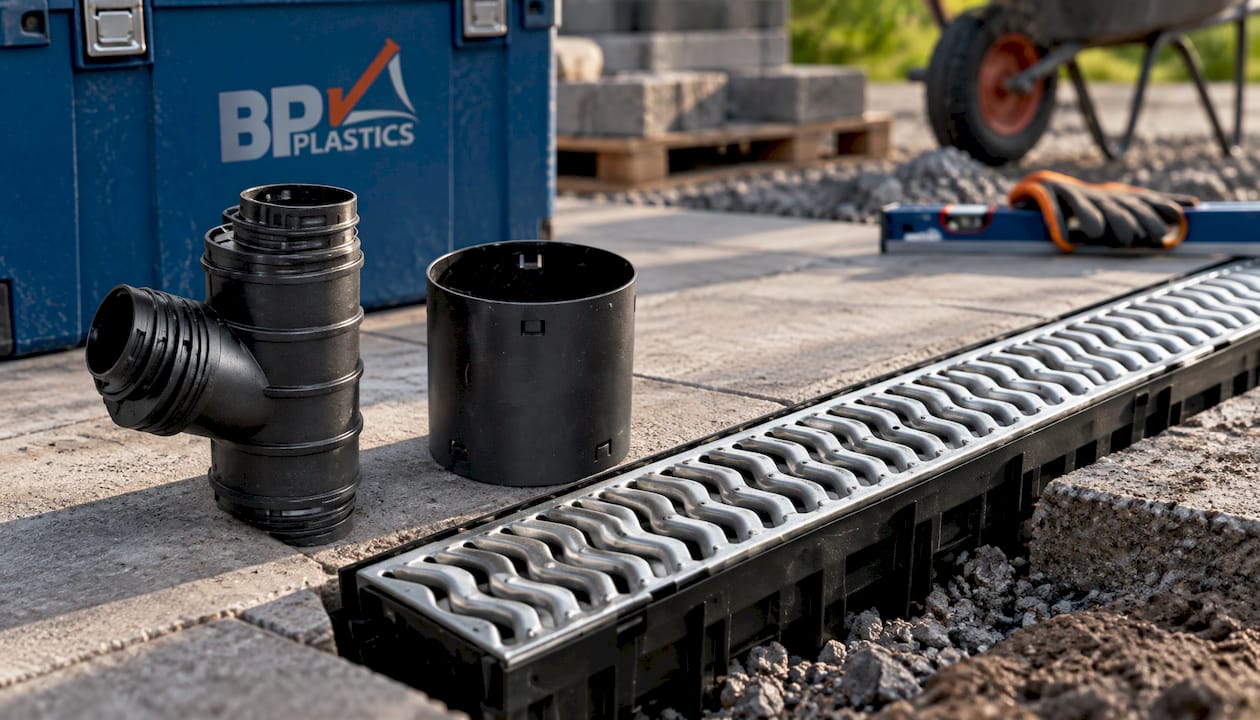
Buying the channel, outlets and pipe together means the connections are matched from the start and the delivery arrives in one go.
Looking after your grates
A blocked grate stops working, and in heavy rain it can cause localised flooding. GOV.UK’s flood risk maintenance guidance (January 2025) says schedules should vary with location, system type and use. For a domestic or small commercial channel, a sensible routine based on that guidance looks like this:
- Inspect visually every three to six months.
- Remove leaves and debris at least twice a year, and more often under trees.
- Have the pipe run jetted or rodded every one to two years.
- Consider a CCTV survey every three to five years on larger or buried systems.
High-priority sites, such as those where flooding would affect property or a public area, are typically checked every six to twelve months. Lift the grate, clear the channel, look at the silt trap, and confirm the grate still sits flush.
FAQ
What load class of channel drain grate do I need for a driveway?
Use at least B125 for a domestic driveway. If delivery lorries or other heavier vehicles may cross the channel, step up to C250. An A15 grate is for patios and footpaths only.
How wide should a channel drain be for a patio?
A 100 mm internal width is the usual choice for patios and domestic driveways. Go wider where the catchment is larger or the fall is shallow. A standard 100 mm deep channel handles most pavements of 200 m² or less.
What is the difference between a slot channel drain and a grated channel?
A slot channel has a narrow opening along the top and no separate grating, giving a minimal finish. A grated channel has a removable grate over an open trough, which is easier to inspect and clean. Both must be matched to the load class and the water volume.
What pipe do channel drains connect to?
Domestic runs usually connect to 110 mm underground drainage pipe, with 160 mm used on larger systems. Check the outlet type on your channel, then buy the matching adaptors and fittings.
Can I use plastic grates on a driveway?
Plastic grates are normally used in gardens, residential areas and walkways. For a driveway, choose a grate and channel marked B125 or higher, whatever the material.
Sources
- What Are the Different Types of Drainage Grates in the UK?
- Drainage-Channel – Linear Drains, Pavingexpert
- Flood risk asset maintenance and inspection: good practice guidance, GOV.UK